
2. Vocabulary review: Feelings and states of mind.
Can you remember the words describing feelings and states of mind that you practised in Reading? Type in the missing words to complete the sentences. You can double-click or double-tap on the space to see the first letter of each word.
3. Expressions with time.
It is not just the best movie of the year so far, but has also become one of my all-time favourites as well.
Use the expressions with time to complete the sentences.
4. Expressions with time.
Type in the missing words to complete the sentences from the previous exercise. Each box can contain one, two or three words.
5. Compound adjectives.
For example: Earth-like, life-bearing, etc.
However, no hyphen is used in a compound formed by an adverb ending in “ly” and a past participle ending in “ed”.
For example: Newly discovered.
Type in the compound adjectives.
6. Describing movement.
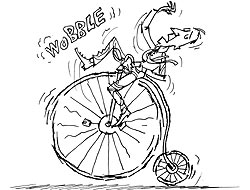
... astronomers have used different telescopes to detect signs of gravitational tugs the planet asserts on its host star, causing it to wobble.
... however, no signs of wobble have been found.
Words like tug and wobble describe how something moves or is moved.
Match more of these words to their definitions. These words can all be used as verbs and nouns.
7. Describing movement.
Use the words below, in the correct form, to complete the sentences.
jerk jiggle jolt judder shiver shudder tremble tug wiggle wobble