1. Quotes about growth and degrowth.
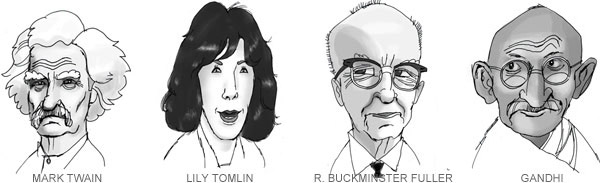
Match the two parts to complete different quotes by famous people about growth and degrowth.
Do you know who said what? Open the window to find out.
2. Downshifting.
Read part of an encyclopaedia article on downshifting. For questions 1-10 decide which answer (A, B, C or D) best fits each gap.
3. Read an article.
Read the first part of an article from a Sunday magazine, and choose the phrase that best summaries each section.
4. Read more.
Read the next section of the article and choose the best option to complete the statements to reflect the author's opinion.
6. Vocabulary.
Read the last section of the article again. Choose the best definition for the underlined words.
The endemic modern tendency to streamline or phase out such professions highlights the lunacy at the heart of the growth-obsessed, resource-intensive consumer economy. Low productivity is seen as a disease. A whole set of activities that could provide meaningful work and contribute valuable services to the community are denigrated because they involve employing people to work with devotion, patience and attention.
But people often achieve a greater sense of well-being and fulfilment, both as producers and consumers of such activities, than they ever do in the time-poor, materialistic supermarket economy in which most of our lives are spent. And here perhaps is the most remarkable thing of all: since these activities are built around the value of human services rather than the relentless outpouring of material stuff, they offer a half-decent chance of making the economy more environmentally sustainable.
Of course, a transition to a low-productivity economy won’t happen by wishful thinking. It demands careful attention to incentive structures – lower taxes on labour and higher taxes on resource consumption and pollution, for example. It calls for more than just lip service to concepts of patient-centred care and student-centred learning. It requires the dismantling of perverse productivity targets and a serious investment in skills and training. In short, avoiding the scourge of unemployment may have less to do with chasing after growth and more to do with building an economy of care, craft and culture. And in doing so, restoring the value of decent work to its rightful place at the heart of society.